
What to Expect on Your First Yoga Retreat
Arriving somewhere you have never been, to do something you have never done, with people you have never met. Here is what the first few days actually look like.
Read articleSample article, placeholder copy, to be replaced
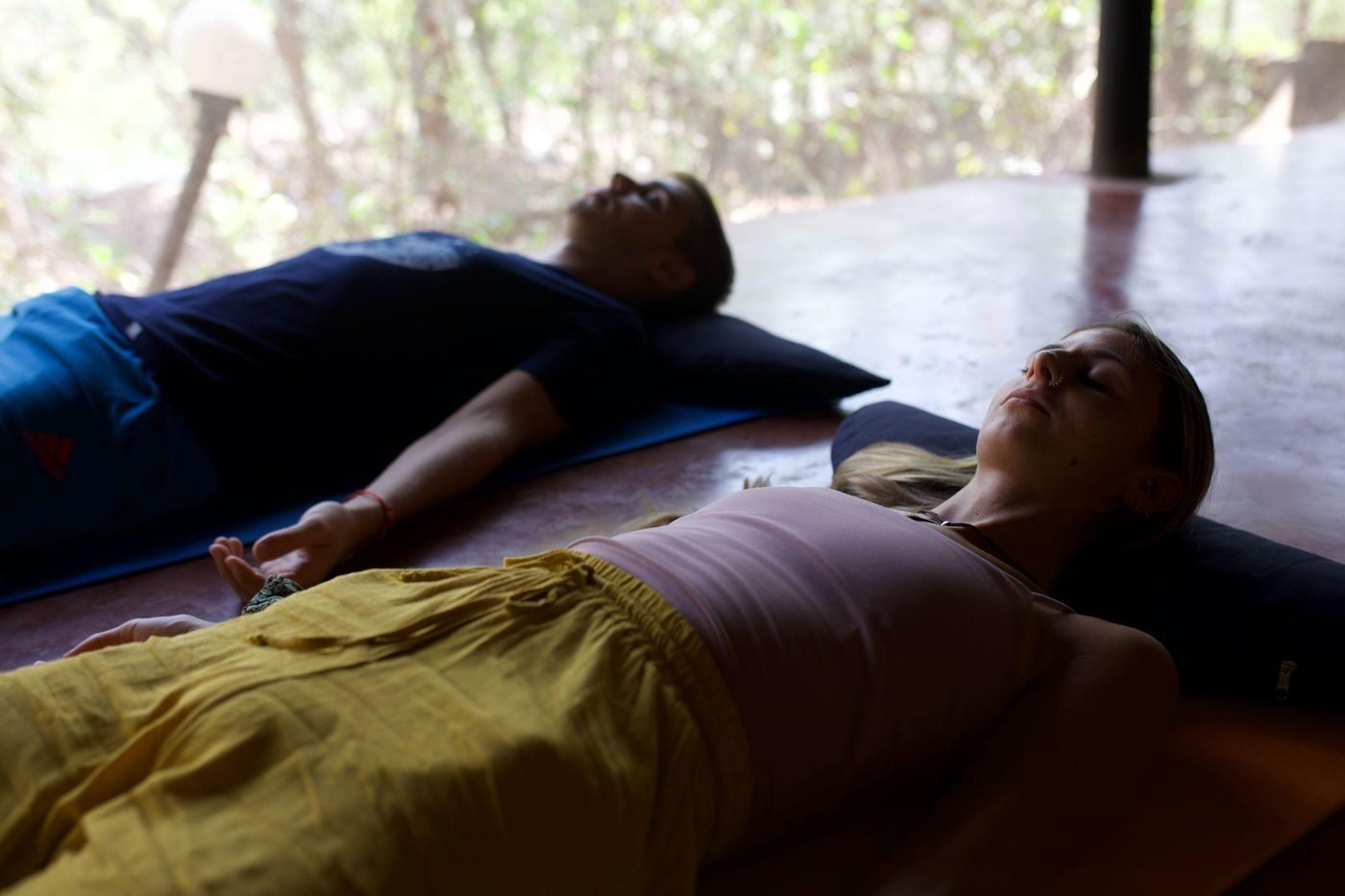
Lying still with your eyes closed while somebody talks. It sounds like the easiest practice in yoga. It is not.
Yoga nidra is systematic rotation of awareness through the body, held at the border between waking and sleep. The posture is savasana and the instruction is simply to stay awake. Almost everybody fails at this for the first several weeks, which is fine.
The structure matters. A full practice moves through a resolve, a rotation of consciousness, breath awareness, pairs of opposite sensations, and visualisation, before returning to the resolve. Each stage does something specific, and the sequence is not decorative.
Thirty minutes of yoga nidra is traditionally said to rest the system as deeply as several hours of sleep. Whether or not you accept the arithmetic, the effect is hard to miss.
A sankalpa is a short statement, made at the beginning and repeated at the end, kept in the same words over months. It is made at the point where the mind is most receptive, which is why it sits where it does in the sequence rather than at the start of the class.
You will. The practice is not wasted; it simply becomes rest rather than yoga nidra. Practise sitting slightly propped, earlier in the day, and it resolves itself.
 Retreats
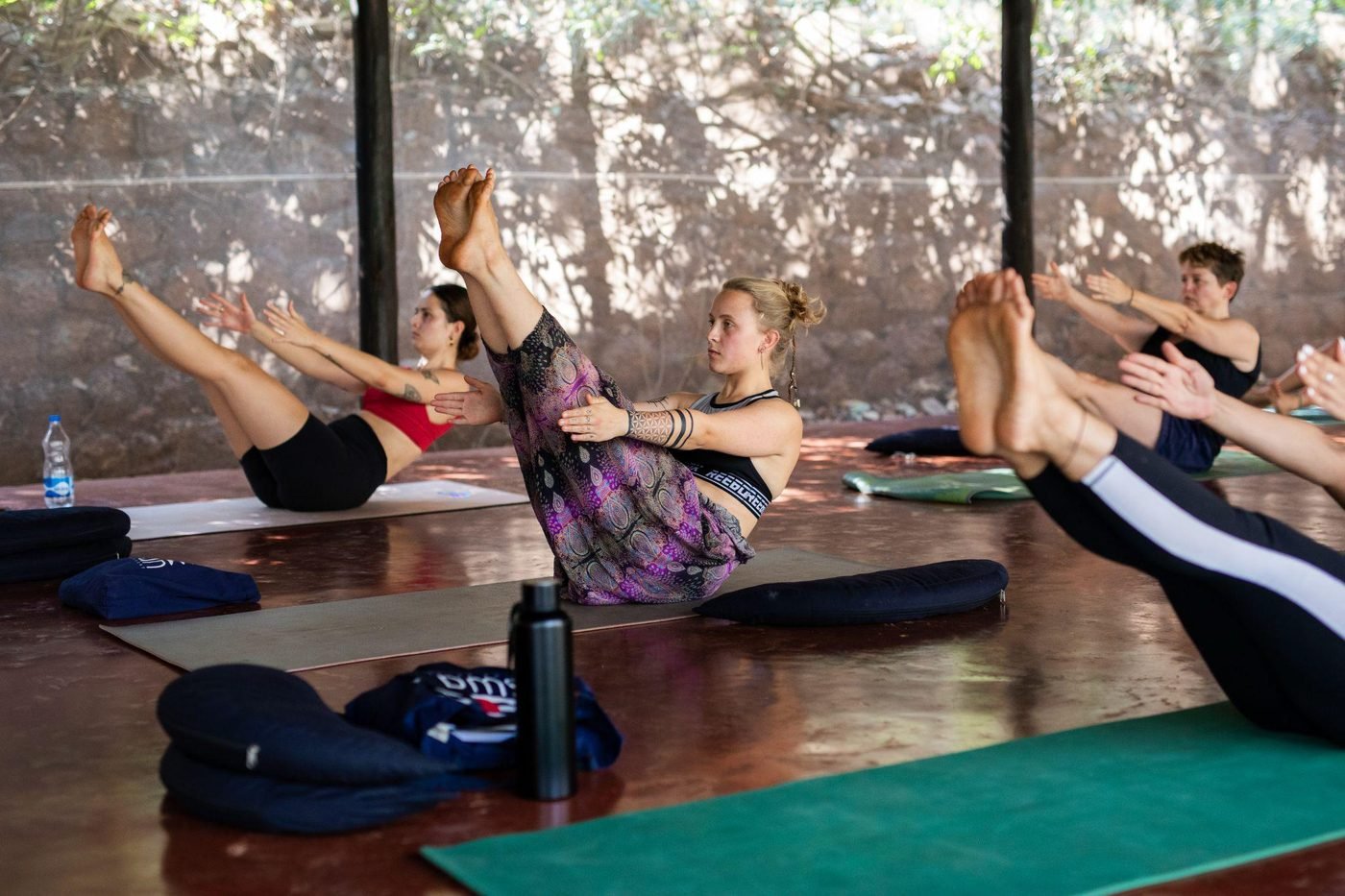
Arriving somewhere you have never been, to do something you have never done, with people you have never met. Here is what the first few days actually look like.
Read article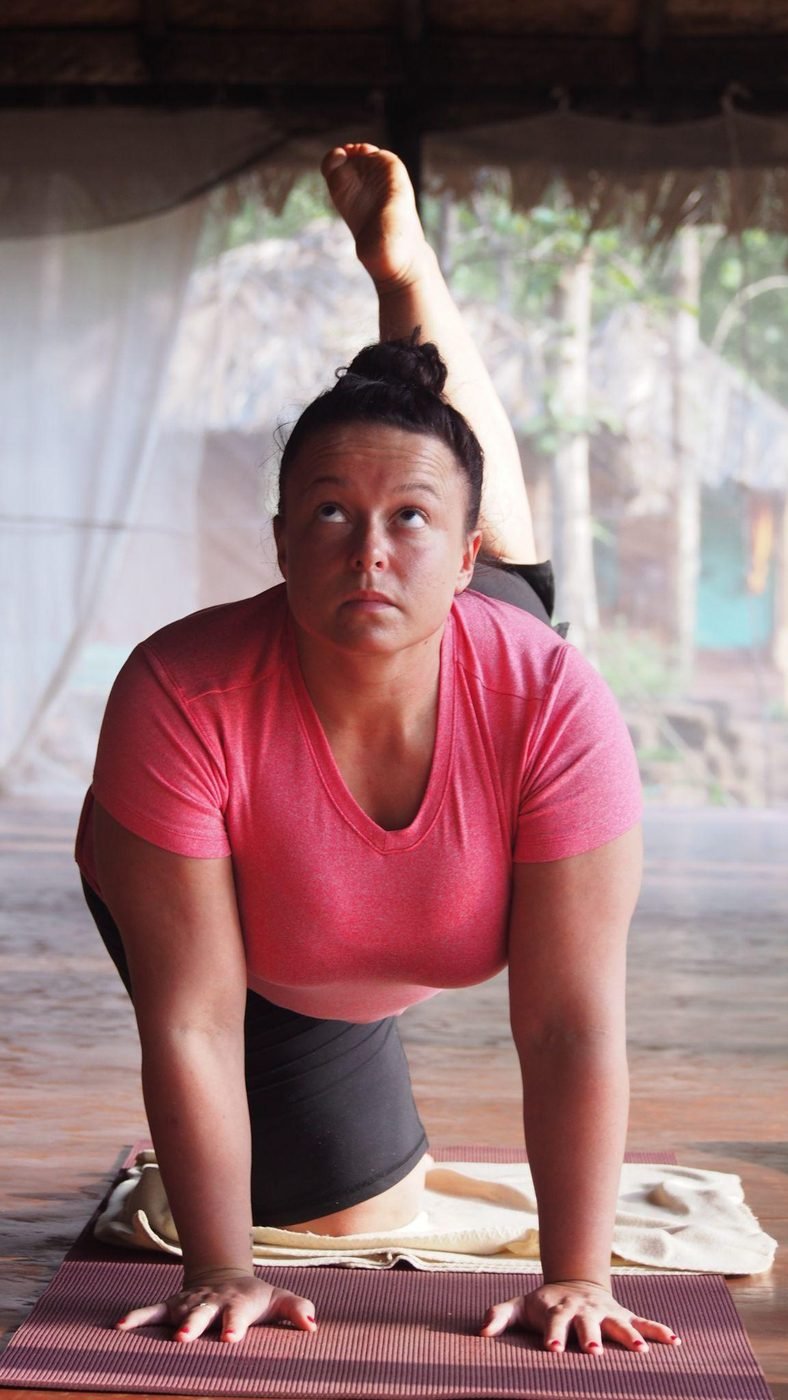 Philosophy
In the tradition we teach, posture is one limb of a much larger practice, and not the one that does most of the work.
Read article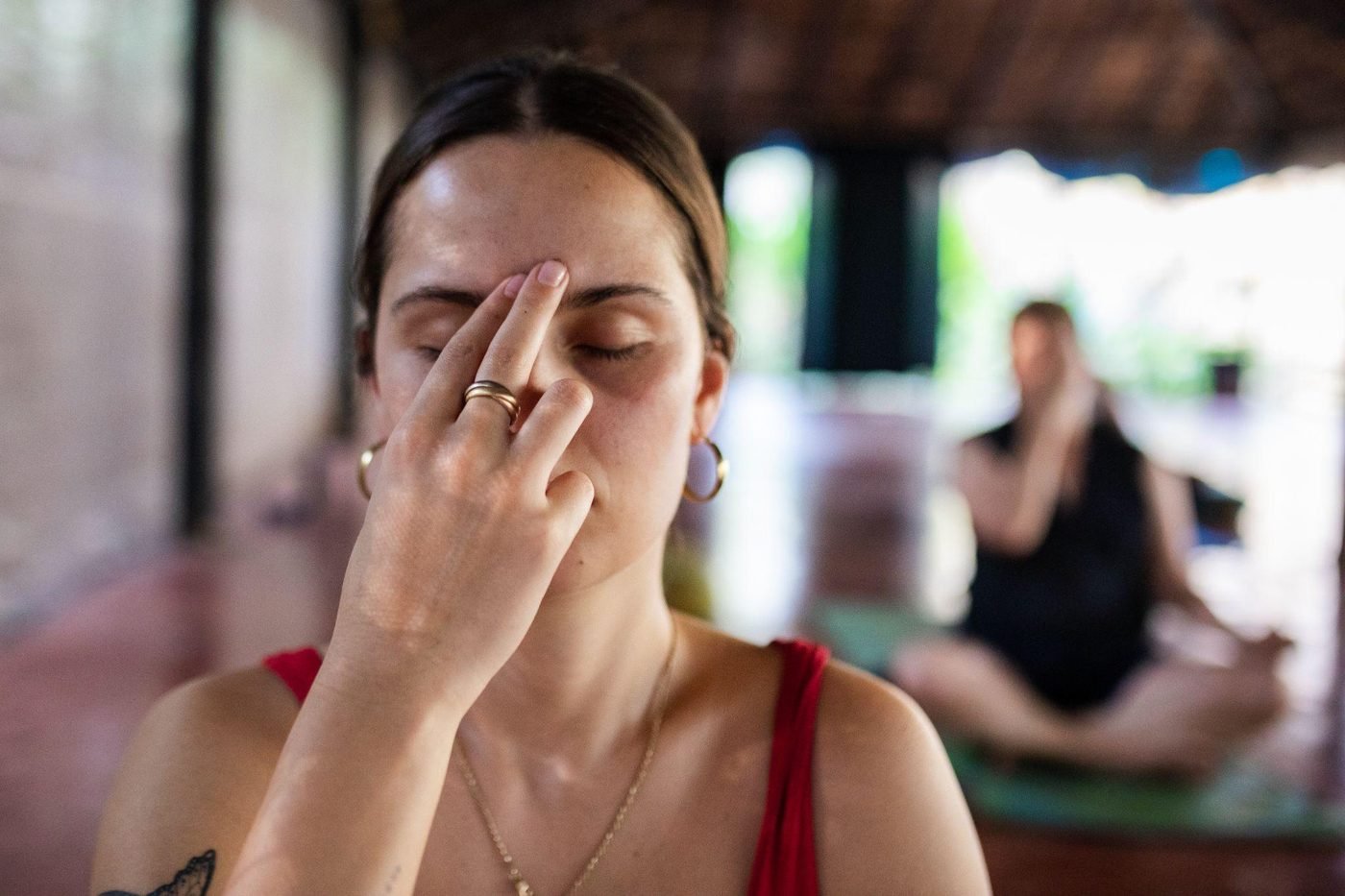 Practice
Breathing practices are the part of yoga most often attempted alone and most often attempted wrongly. A short, honest starting point.
Read articleEverything written here is taught in person, in sequence, at the ashram in Assagao.