
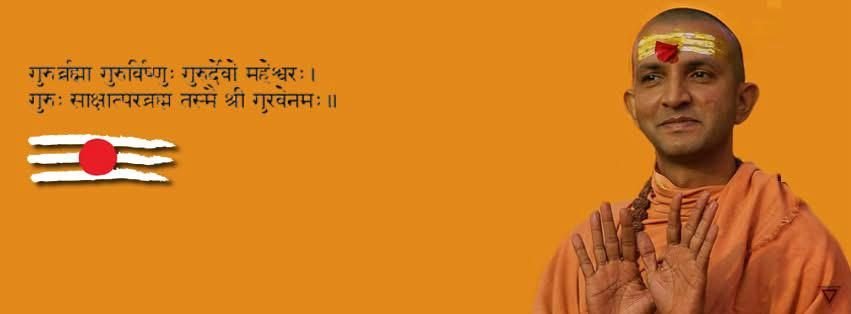
Every tradition is carried forward by people who received something from those who came before them.
At SWAN, we constantly draw inspiration from the teachers, sages and spiritual masters who have shaped the understanding and practice of Yoga in India and around the world.
Their lives, teachings and service continue to influence the way we study, practise, teach and live at SWAN. This page is our small acknowledgement of some of those who have inspired us most deeply.

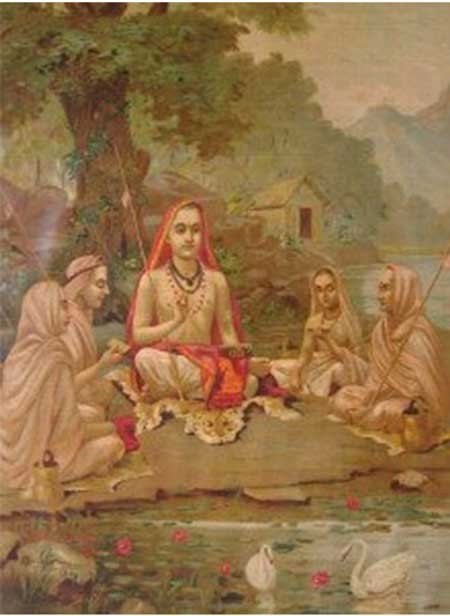
Sri Adi Shankaracharya
Born in the 8th century AD, Adi Shankaracharya is regarded as one of the great spiritual teachers of India.
He propagated the philosophy of Advaita Vedanta, teaching the essential unity of existence and pointing towards the direct recognition of the Self as one with the ultimate reality.
Adi Shankaracharya also established the Dashnami Sannyasa tradition, bringing together different groups of renunciates under a common monastic tradition associated with Sanatana Dharma.
The Dashnami tradition continues to carry his vision of spiritual knowledge, renunciation and the search for truth.
His influence reaches deeply into the lineage from which our own Yoga tradition comes, and his teachings remain an important source of study and contemplation at SWAN.
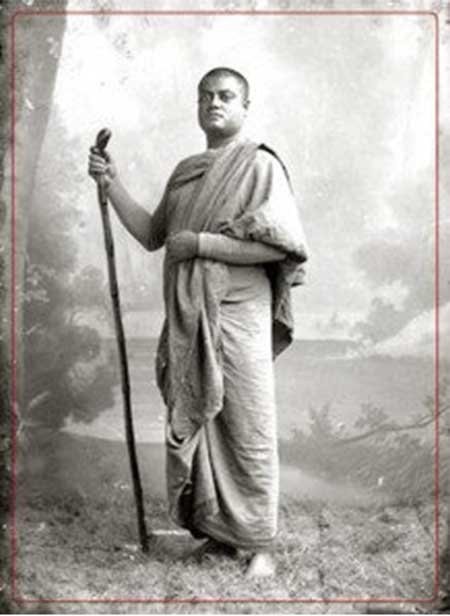
Swami Vivekananda
Swami Vivekananda (1863 to 1902) was a Hindu monk and chief disciple of Sri Ramakrishna Paramahamsa.
He played a major role in bringing the philosophies of Vedanta and Yoga to a wider audience in the West and in presenting India’s spiritual traditions to the modern world.
He is perhaps best known for his address at the Parliament of the World’s Religions in Chicago in 1893, which began with his famous words, “Sisters and brothers of America.”
But his contribution went far beyond that speech. Swami Vivekananda presented spirituality as something that should find expression in life and service. His teachings brought together spiritual practice, strength of character, knowledge and service to humanity.
That connection between Yoga and service continues to be meaningful to us at SWAN.
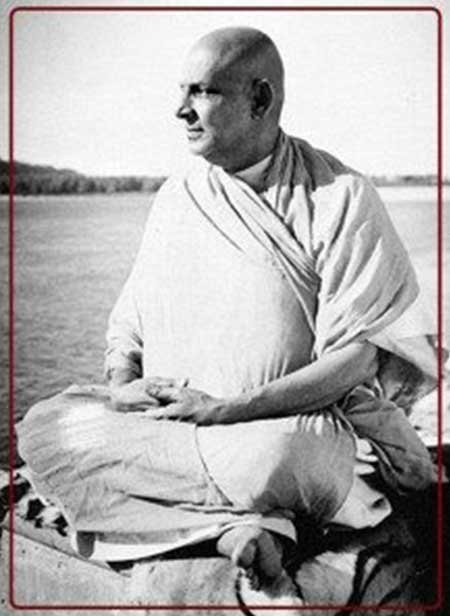
Sri Swami Sivananda Saraswati
Sri Swami Sivananda Saraswati was born in Pattamadai, Tamil Nadu, in 1887.
After working as a medical doctor in Malaya, he eventually renounced his medical practice and travelled to the Himalayas in search of a Guru. He settled in Rishikesh and was initiated into the Dashnami Sannyasa tradition in 1924 by Swami Vishwananda Saraswati of Sringeri Math.
Swami Sivananda became a prolific writer, producing hundreds of books and articles on Yoga, Vedanta, spirituality and practical living.
His teaching sought to make spiritual knowledge accessible to ordinary people. He emphasised that Yoga should not remain confined to those who were already able to seek it, but should be shared with people seeking health, peace of mind, knowledge and spiritual understanding.
His famous teaching, “Serve, Love, Give, Purify, Meditate, Realize,” reflects the practical spirit of his approach.
His emphasis on service, simplicity and making Yoga accessible continues to influence the way we understand our own work.
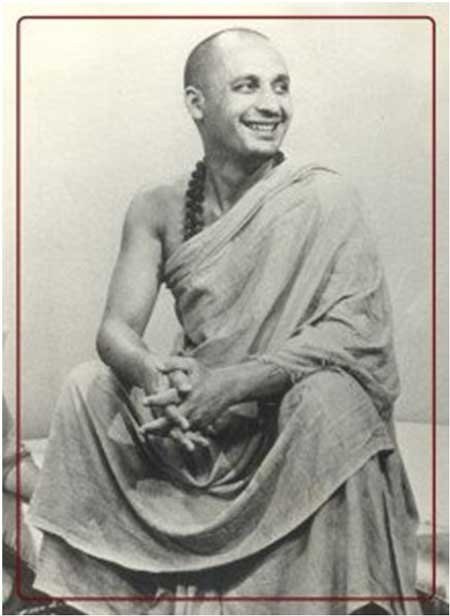
Sri Swami Satyananda Saraswati
Sri Swami Satyananda Saraswati (1923 to 2009) was born in Almora in northern India.
In 1943, he travelled to Rishikesh, where he met Swami Sivananda and was initiated into the Dashnami Sannyasa tradition. For the next twelve years he lived and worked within the ashram, receiving extensive training while serving his Guru.
In 1955, Swami Satyananda left the ashram and travelled throughout India as a Parivrajaka, a wandering mendicant, exploring the country and deepening his understanding of India’s spiritual traditions.
Inspired by Swami Sivananda’s integral approach to Yoga, he founded the International Yoga Fellowship Movement in 1956 and the Bihar School of Yoga in 1963. These institutions became important centres for the study and dissemination of Yoga.
He later established the Yoga Research Foundation and Sivananda Math, continuing his Guru’s emphasis on Yoga, research, education and service.
The influence of Swami Satyananda’s work is particularly close to us. The Bihar School of Yoga tradition forms an important part of the teaching lineage at SWAN and continues to shape our approach to Hatha Yoga, meditation, Yoga Nidra, Tantra, yogic kriyas and Yoga philosophy.
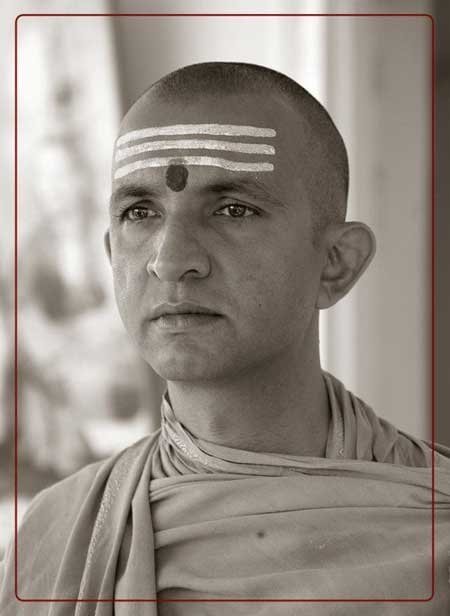
Sri Swami Niranjanananda Saraswati
Swami Niranjanananda Saraswati was born in Rajnandgaon, Chhattisgarh, in 1960.
Guided by his Guru, Swami Satyananda Saraswati, from childhood, he came to live at the Bihar School of Yoga in Munger at the age of four. There he received extensive training in Yoga and the spiritual sciences. In 1971, he was initiated into the Dashnami Sannyasa tradition.
For the following eleven years he lived outside India, developing an understanding of different cultures and helping to establish Satyananda Yoga ashrams and centres in Europe, Australia, North America and South America.
At the request of his Guru, he returned to India in 1983 to guide the activities of the Bihar School of Yoga, Sivananda Math and the Yoga Research Foundation at Ganga Darshan. He was initiated as a Paramahamsa Sannyasin in 1990 and in 1995 succeeded Swami Satyananda Saraswati as spiritual preceptor.
Among his many contributions were the establishment of Bihar Yoga Bharati, the first university dedicated to Yoga, in 1994, and the Yoga Publications Trust in 2000. He also initiated the children’s Yoga movement, Bal Yoga Mitra Mandal.
Swami Niranjanananda has written extensively on Yoga, Tantra, meditation and the Upanishads and has guided seekers around the world.
For us, however, his significance is deeply personal. He is our Guru.
The teachings we share at SWAN are shaped by what we received through his guidance and through the tradition of the Bihar School of Yoga. His approach to combining the depth of tradition with an understanding of contemporary life continues to influence how we teach and how we live.
A name offered in gratitude.
The name SWAN is itself a dedication to our Guru. SWAN comes from SWami Niranjan, a simple abbreviation formed from the name by which our Guru is known to us.
The name is therefore more than a brand. It is our acknowledgement of the Guru whose guidance has shaped much of what we are trying to preserve and share. Every time we use the name SWAN, we are reminded of the lineage, teachings and responsibility that stand behind it.
What we have received, we try to share.
The teachers who inspire us belong to different generations, but there is a thread running through their lives. Study and practice. Tradition and enquiry. Personal discipline and service to others.
At SWAN, we do not see ourselves as having arrived at the end of that journey. We are students too.
We have received teachings from those who came before us, and our responsibility is to practise them sincerely, understand them as deeply as we can and share them with those who come to learn with us. That is the spirit in which we continue the work at SWAN.
Study in the tradition these teachers carried.
Our teacher trainings, retreats and courses are taught within the Satyananda lineage of the Bihar School of Yoga, by teachers who trained inside it.