
In the service of Yoga and humanity
SWAN grew from a simple resolve: to create a place where traditional Yoga, Ayurveda and the Indian way of living could be experienced as something more than a class, a treatment or a holiday.
Set among the tropical hills and forests of Assagao, SWAN follows the principles of an ashram and the traditional Gurukula approach to learning. Teachers and students live in the same environment, practice together, share daily life and learn through both formal teaching and everyday experience.
For us, Yoga is not limited to what happens on the mat.
SWAN was created by practitioners who have spent many years studying and living within traditional Yoga ashrams in India.
Our approach has been shaped by the teachings of the Bihar School of Yoga and the wider traditions of Hatha Yoga, meditation, Yoga philosophy, Tantra and Ayurveda.
We offer a place where these traditions can be studied and experienced in a residential setting, with time for practice, study, reflection, rest and participation in everyday life.
The campus is surrounded by tropical nature, but nature is not simply a backdrop. The gardens, open spaces, Yoga shalas, temple, kitchen and residential cottages are all part of the environment in which practice takes place.
Morning meditation, asana, pranayama, yogic kriya, Yoga Nidra, mantra, philosophy and sacred fire ceremonies are woven into the rhythm of life at SWAN.
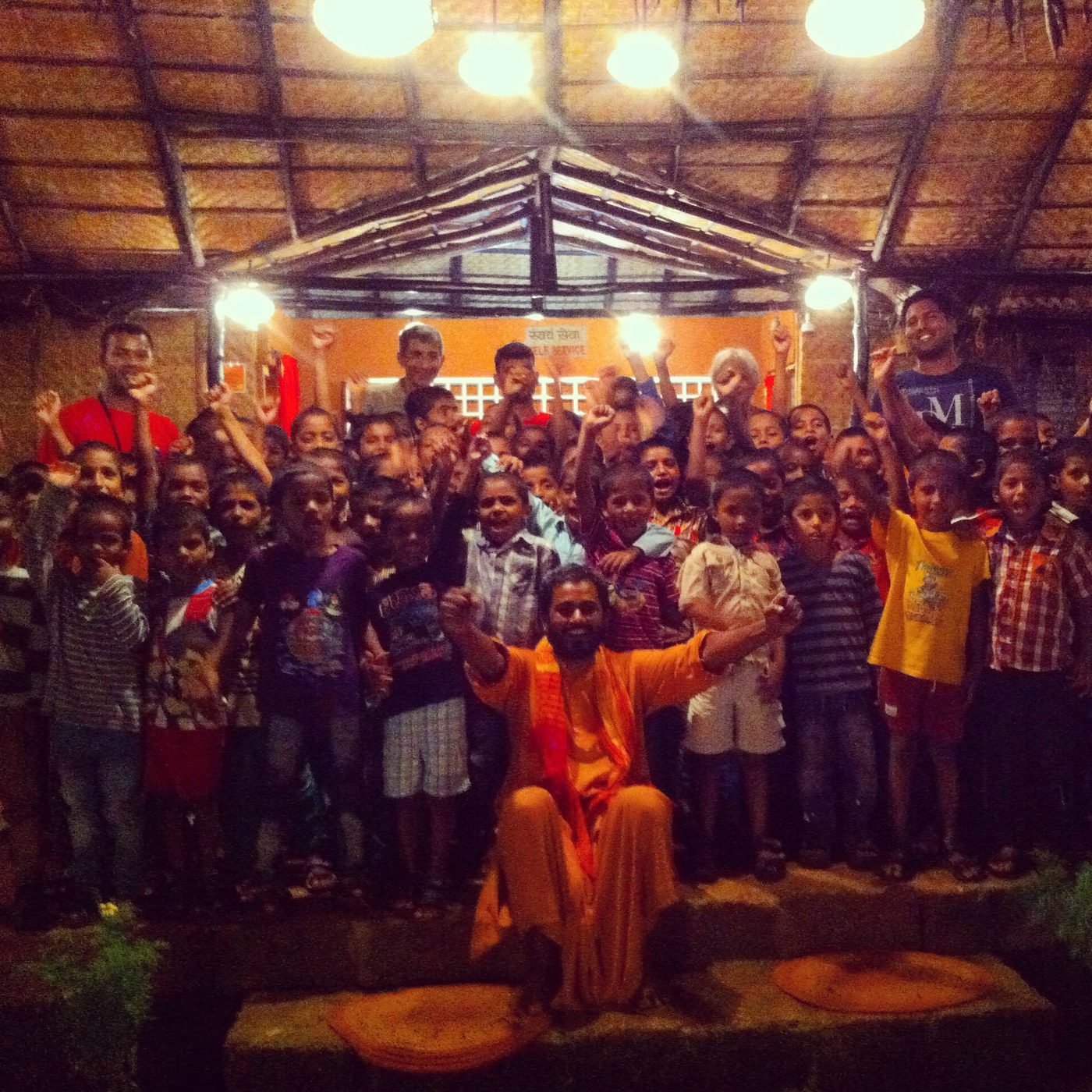
The word, and the way of life behind it
If you have not come across the word before: an ashram is a place set aside for practice. It comes from the Sanskrit shrama, meaning effort or sustained work, the kind of steady, unglamorous effort that practice actually asks for. Traditionally an ashram is a residential community gathered around a teacher and a body of knowledge, where study and ordinary daily life are not treated as separate things.
It is not a temple, and it is not a hotel. It is closer to a household with a purpose. People live there for a while, practise together, eat together, and take part in running the place.
What that means day to day is mostly a matter of rhythm. The day has a shape, and the shape is set by practice rather than by a schedule of activities. Mornings begin early, before the heat and before the noise. Asana, pranayama and meditation come first. Meals are vegetarian, taken together and at set times. Afternoons leave room for study, rest and questions. Evenings turn quieter, with havan, mantra or kirtan, and then an early night, because the morning starts early again.
The other difference a visitor notices is participation. In an ashram you are not a guest being served; you are part of the household for as long as you stay. Rooms are simple, spaces are shared, and there is little to distract you. For most people that turns out to be the point rather than the price.
At SWAN we follow these principles rather than imposing them. Your room is your own and has its own bathroom. Nobody takes vows, nobody is asked to adopt a belief, and nobody is turned away for not knowing the vocabulary. The structure of the day is an invitation: the more of it you take part in, the more the stay tends to give back.
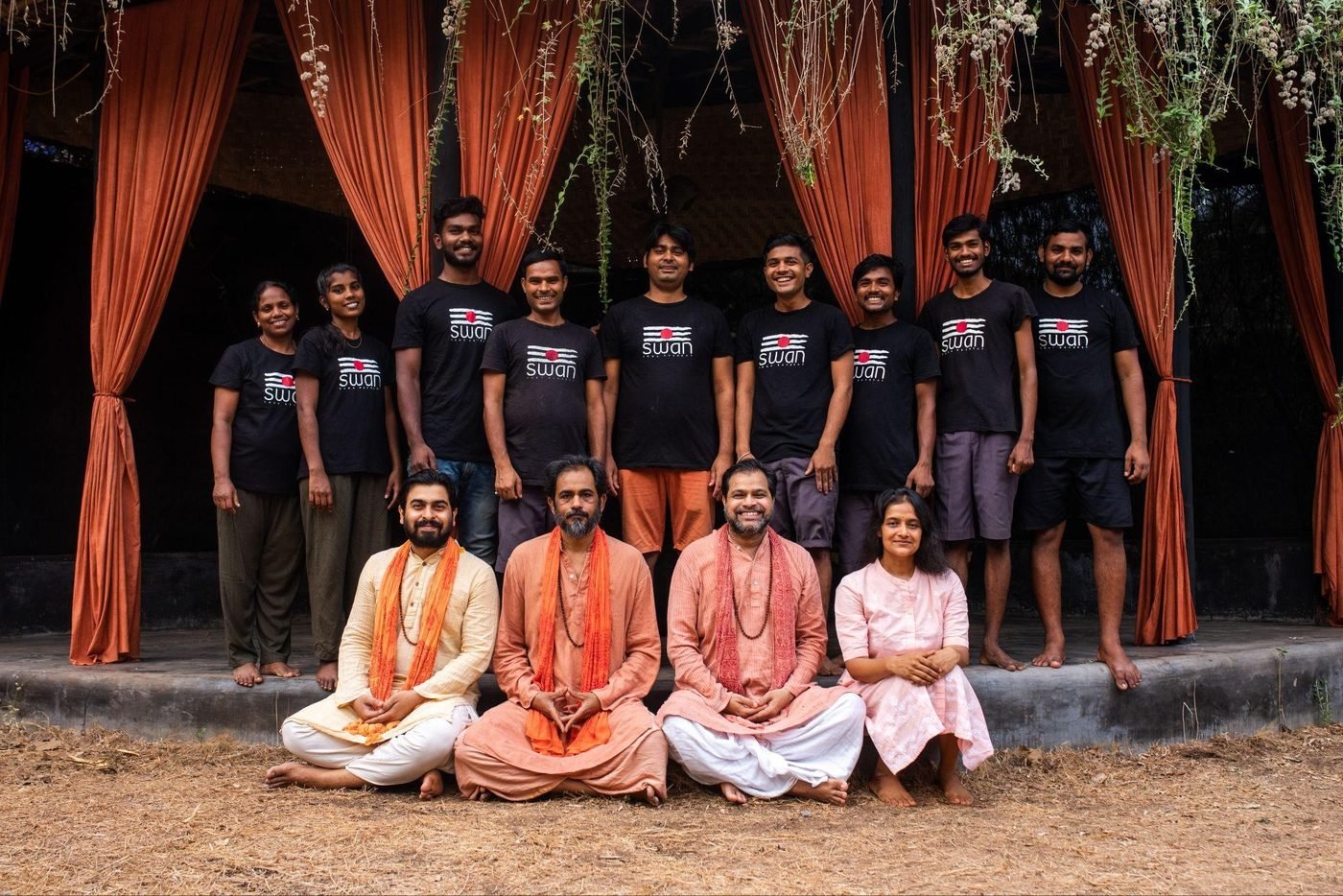
Come and live with the teacher
The word Gurukula describes an ancient Indian approach to learning in which students live with their teacher and learn not only through formal instruction but through participation in daily life.
This principle remains central to SWAN.
Yoga is taught here as a complete tradition. Asana is important, but it is only one part of the journey. Alongside physical practice, we explore pranayama, meditation, Yoga Nidra, mantra, Yoga philosophy, the Yoga Sutras of Patanjali, Tantra and the attitudes and disciplines that give Yoga its deeper context.
Learning continues outside the Yoga shala. Meals, work, conversation, silence, study, service and the simple rhythm of living together can all become part of the learning.
There is no expectation that everyone arrives at the same point. We welcome beginners, experienced practitioners, Yoga teachers and those who have been exploring these traditions for many years.
What matters is a genuine interest in learning and a willingness to participate.

Yoga as a complete tradition
At SWAN, we follow a traditional approach to Yoga rooted in the Indian knowledge traditions.
Our teaching draws from classical Hatha Yoga and the traditions of the Bihar School of Yoga, with an emphasis on practice, experience and understanding rather than Yoga as physical exercise alone.
Depending on the programme, guests may encounter asana, pranayama, shatkarma, meditation, Yoga Nidra, mantra, Kirtan, Yoga philosophy, self inquiry and Tantra.
The intention is not to separate these practices into unrelated activities, but to understand how they form parts of a larger tradition.
Traditional Ayurveda in a residential setting
Ayurveda is another important part of the SWAN approach.
Our Ayurveda centre offers traditional Ayurvedic consultations, therapies, rejuvenation programmes and Panchakarma under the guidance of an Ayurvedic physician.
Yoga and Ayurveda share many fundamental ideas about lifestyle, food, daily routine, balance and wellbeing. At SWAN, the two traditions can therefore support one another within the same residential environment.
For guests coming specifically for Ayurveda, the experience includes more than treatment rooms. Food, rest, daily routine, Yoga and the natural surroundings all become part of the setting in which the treatment takes place.
Learning, teaching and living together
SWAN is a small residential community rather than a large commercial retreat.
Our teachers and practitioners bring decades of combined experience in Yoga, Ayurveda and traditional Indian practices. They live and work within the same environment as the guests and students who come here.
This creates a more personal relationship between teacher and student and allows questions, conversations and learning to continue beyond scheduled classes.

A place for people who want to practise, learn and participate
SWAN is for people who are genuinely interested in traditional Yoga and Ayurveda and want to experience them within a residential setting.
You may be completely new to Yoga. You may already have a long personal practice. You may be looking for a traditional Yoga retreat in India, a Yoga Teacher Training, an Ayurveda retreat in Goa, Panchakarma, meditation or simply time away from everyday life in an environment that encourages deeper practice.
You do not need to arrive with extensive knowledge.
What we do ask is that you come with openness, curiosity and respect for the traditions we teach.
And What SWAN Is NotAn ashram in spirit, not a hotel in disguise
SWAN is comfortable, clean and spacious, but it is not a luxury resort and it is not designed to function like a hotel.
Life here follows the rhythm of a residential Yoga ashram. There is shared practice, shared dining, participation in daily life and an emphasis on simplicity.
If your main expectation is resort style service, entertainment or a conventional holiday experience, SWAN may not be what you are looking for.
If you are looking for authentic Yoga, traditional Ayurveda, meaningful practice, study, nature and the opportunity to live within a community for a while, you may feel very much at home here.
Service beyond the campus
SWAN Yoga Retreat and SWAN Ayurveda are the public facing names of the SWAN Foundation for Ayurveda and Yoga Research, a non-profit organisation.
The foundation was established with a wider purpose than running a retreat centre. Part of what SWAN generates goes towards initiatives including education for underprivileged girls, women’s literacy and skills development, and making Yoga more accessible where it is needed.
For us, service is not separate from Yoga. It is one way of putting the principles of Yoga into practice.
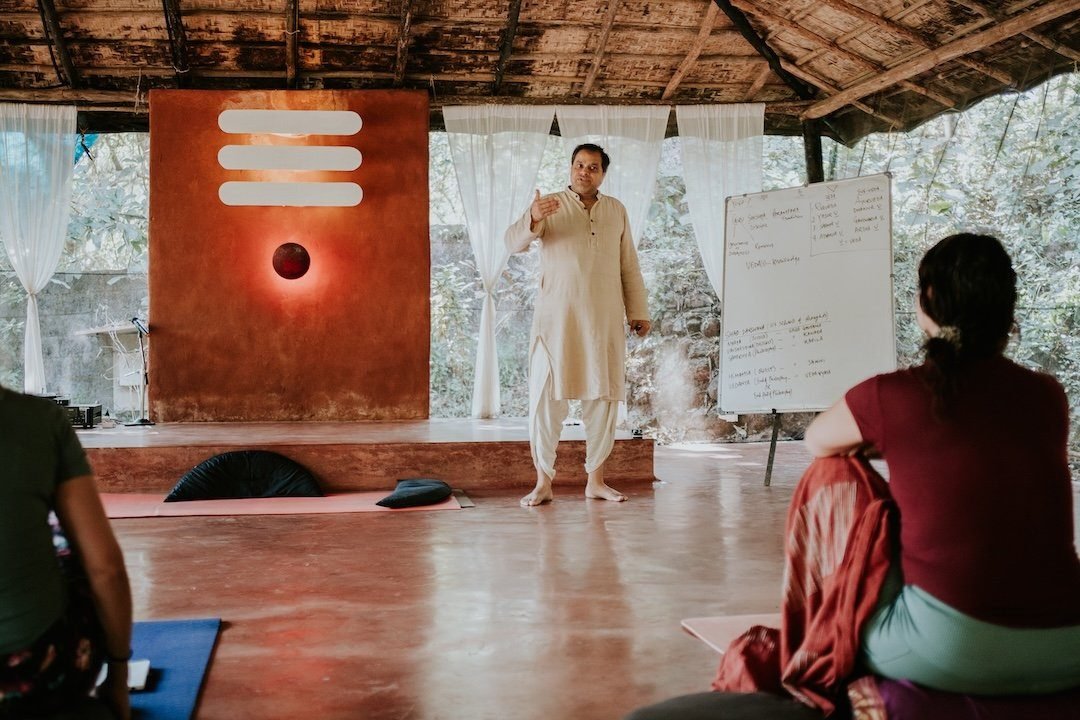
A tradition carried through people
SWAN exists because of the people who have studied, practised and carried these traditions before us.
Our teachers come from different areas of Yoga and Ayurveda, while sharing a commitment to traditional teaching and residential learning.
Their experience includes Hatha Yoga, meditation, Yoga philosophy, Tantra, Ayurveda and the Gurukula approach to learning.
See whether SWAN is right for you
SWAN is open from October through May for residential Yoga retreats, Yoga Teacher Training, Ayurveda retreats, Panchakarma programmes, meditation courses and other traditional practices. Tell us what you are looking for, what you hope to learn or experience, and how long you would like to stay. We will tell you honestly whether SWAN is the right place for you.