
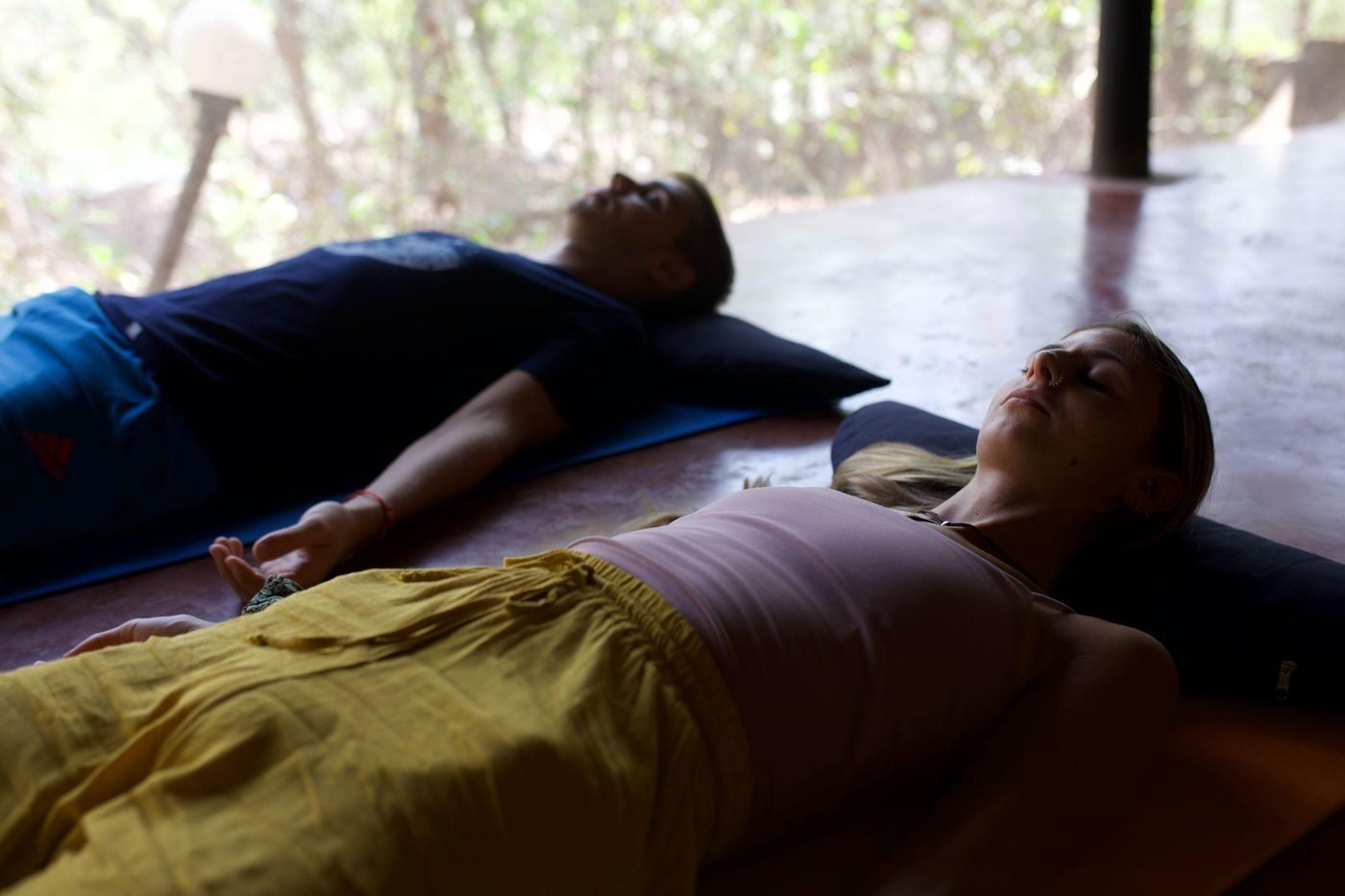
Yoga Nidra and the Art of Conscious Sleep
Lying still with your eyes closed while somebody talks. It sounds like the easiest practice in yoga. It is not.
Read articleSample article, placeholder copy, to be replaced

Not bland, not raw, and not a diet. A short guide to the principle behind the food served at an ashram kitchen.
Guests often arrive expecting ashram food to be an endurance test. It is usually the thing they ask for the recipes of. Sattvic cooking is not about restriction, it is about choosing food that leaves the mind clear enough to practise.
Ayurveda describes food, like everything else, in terms of three qualities: sattva, clarity and lightness; rajas, stimulation and restlessness; and tamas, heaviness and dullness. A sattvic kitchen leans towards the first without pretending the other two do not exist.
The test of a sattvic meal is not how it tastes. It is how you feel sitting for meditation two hours later.
Regular timing does as much work as the ingredients. Digestion, in the Ayurvedic view, is strongest in the middle of the day, which is why the main meal is at lunch and the evening meal is light and early.
Vegan, gluten-free and most allergy requirements can be accommodated in a kitchen that is already cooking from scratch, but tell us when you book rather than on arrival.
 Practice
Lying still with your eyes closed while somebody talks. It sounds like the easiest practice in yoga. It is not.
Read article Retreats
Arriving somewhere you have never been, to do something you have never done, with people you have never met. Here is what the first few days actually look like.
Read article Philosophy
In the tradition we teach, posture is one limb of a much larger practice, and not the one that does most of the work.
Read articleEverything written here is taught in person, in sequence, at the ashram in Assagao.